



Description
Overview
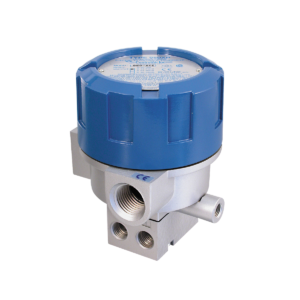
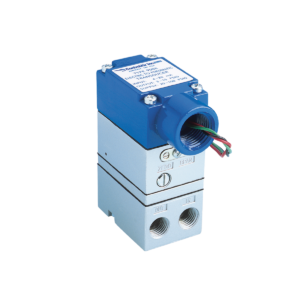
The Type 590X I/P Transducer converts a variable 4-20 mA electrical input signal into a linearly proportional pneumatic output pressure. Its compact size, light weight, and resistance to shock and vibration make it well suited for demanding process control applications and dense panel installations.
The Type 590X uses open-loop conversion technology and a low-mass magnet to provide accurate pneumatic pressure control at an economical cost. The unit can be mounted in any position and is designed to remain stable in high-vibration environments.
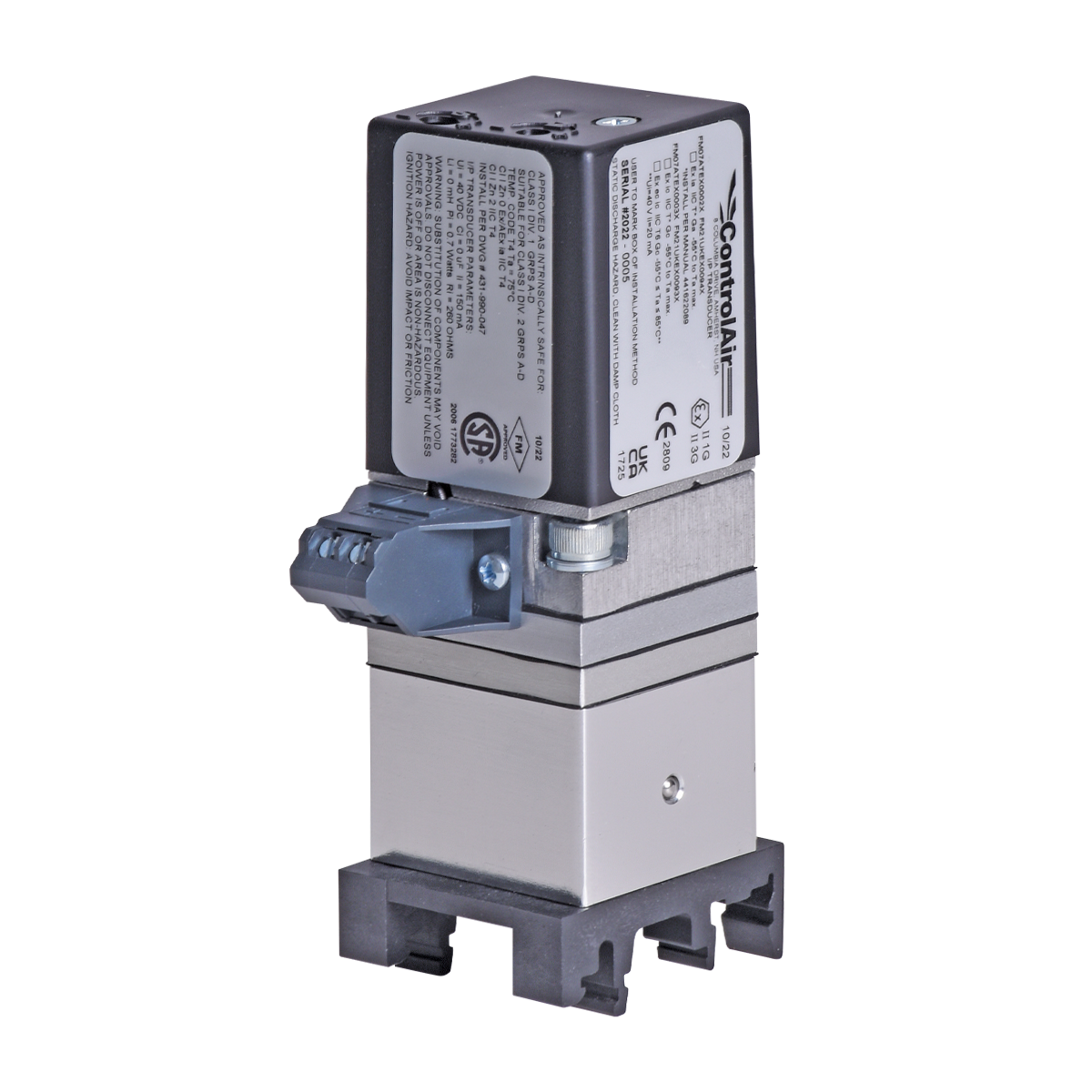
Available output ranges include 3-15 psig, 3-27 psig, and 6-30 psig. FM and CSA approvals are standard, with optional ATEX and UKCA approvals for qualifying applications. A standard DIN rail adapter simplifies installation, while an optional low-temperature configuration supports operation down to -67°F (-55°C).
Key Features
- Converts a 4-20 mA signal into proportional pneumatic pressure
- Compact size for dense panel mounting
- Lightweight construction
- Insensitive to mounting position
- Stable in high-vibration environments
- Open-loop control with low-mass magnet technology
- Accurate and economical pressure conversion
- Impervious to RFI/EMI interference
- Three available pneumatic output ranges
- Standard DIN rail mounting adapter
- Wide operating temperature range
- Optional low-temperature operation
- FM and CSA approvals standard
- Optional ATEX and UKCA approvals
- Replaceable inlet filter
Performance Characteristics
- Input Signal: 4-20 mA
- Output Pressure Ranges: 3-15 psig, 3-27 psig, and 6-30 psig
- Maximum Supply Pressure: 22 psig for 3-15 psig models and 42 psig for 3-27 psig and 6-30 psig models
- Minimum Supply Pressure: 5 psig above the maximum output pressure
- Flow Capacity: 2.4 scfm maximum
- Air Consumption: 6 scfh (170 Nl/hr)
- Standard Temperature Range: -40°F to 185°F (-40°C to 85°C)
- Low-Temperature Option: -67°F to 158°F (-55°C to 70°C)
- Relative Humidity: 75% average and 95% short-term, non-condensing
- Impedance: 260 ohms at 70°F (21°C)
- Loop Load: 5.2 volts at 70°F
- Independent Linearity: Less than ±0.5% of span
- Hysteresis: Less than ±0.3% of span
- Deadband: Less than ±0.1% of span
- Repeatability: Less than ±0.3% of span and less than ±0.15% typical
- Mounting Orientation Effect: Less than ±0.5% per 90-degree change
- Air Supply Sensitivity: Less than 0.3% per 1.5 psig supply change
- Vibration Effect: Less than ±1% up to 10g and 20-80 Hz
- Temperature Effect: Less than ±0.75% per 10°F change
- Pneumatic Ports: 1/8″ NPT inlet, outlet, and P connection
- Electrical Connection: Terminal block
- Operating Media: Clean, dry, oil-free instrument air filtered to 40 microns
- Enclosure: NEMA 1/IP20
- Mounting: Pipe or DIN rail
- Weight: 0.75 lb (0.34 kg)
The Type 590X provides stable current-to-pressure conversion in applications where vibration, mounting orientation, compact size, and hazardous-area approvals are important selection factors.
How to Select the Right Configuration
Selecting the correct Type 590X configuration depends on the required pneumatic output range, supply pressure, ambient temperature, mounting method, and hazardous-area approval requirements.
- Select the 3-15 psig output for standard process-control and valve-positioning applications.
- Select the 3-27 psig output when a wider pneumatic span is required.
- Select the 6-30 psig output for higher-pressure control signals.
- Verify that supply pressure is at least 5 psig above the maximum required output.
- Use the standard DIN rail adapter for compact control-panel installation.
- Use pipe mounting when the transducer will be installed directly in the pneumatic system.
- Select the low-temperature option for ambient temperatures below -40°F.
- Select the ATEX/UKCA approval option when required by the installation.
- Use only clean, dry, oil-free instrument air filtered to 40 microns.
- Confirm that the 2.4 scfm flow capacity is adequate for the connected pneumatic load.
- Use a downstream volume booster if the application requires substantially greater flow capacity.
For additional guidance:
Applications
The Type 590X is designed for process control applications requiring compact, vibration-resistant current-to-pressure conversion.
- Pneumatic valve actuators
- Valve positioners
- Process control loops
- Industrial automation systems
- High-vibration machinery
- Compact control panels
- OEM equipment
- Hazardous-area instrumentation
- Oil and gas process equipment
- Chemical processing systems
- Remote pneumatic control systems
- DIN rail-mounted instrumentation
Explore more applications:
Models & Configurations
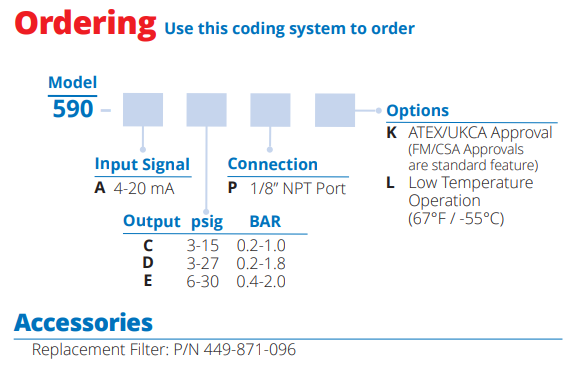
Type 590X Ordering Structure
590 – A [Output] P [Options]
Input Signal
- A = 4-20 mA
Output Pressure Ranges
- C = 3-15 psig (0.2-1.0 bar)
- D = 3-27 psig (0.2-1.8 bar)
- E = 6-30 psig (0.4-2.0 bar)
Connection
- P = 1/8″ NPT port
Available Options
- K = ATEX and UKCA Approval; FM and CSA approvals are standard
- L = Low-Temperature Operation down to -67°F (-55°C)
Accessories
- Standard DIN Rail Mounting Kit: P/N 445-766-024
- Replacement Filter: P/N 449-871-096
Technical Resources
- Product Data Sheet
- Installation Instructions
- Product Configurator
- 3D CAD Models
- Certifications
- Engineering Support Resources
FAQs
What does the Type 590X I/P transducer do?
The Type 590X converts a 4-20 mA electrical input into a linearly proportional pneumatic output pressure.
What output pressure ranges are available?
The Type 590X is available with 3-15 psig, 3-27 psig, and 6-30 psig output ranges.
Can the Type 590X be mounted in any position?
Yes. The Type 590X is designed to operate in any mounting position, with a mounting orientation effect of less than ±0.5% per 90-degree change.
Is the Type 590X suitable for high-vibration applications?
Yes. The Type 590X is stable in high-vibration environments and has a vibration effect of less than ±1% at up to 10g and 20-80 Hz.
What is the maximum flow capacity?
The maximum flow capacity is 2.4 scfm.
What supply pressure is required?
Supply pressure must be at least 5 psig above maximum output. The maximum supply pressure is 22 psig for 3-15 psig models and 42 psig for 3-27 psig and 6-30 psig models.
What hazardous-area approvals are available?
FM and CSA approvals are standard. ATEX and UKCA approvals are available as an option.
Can the Type 590X operate in low-temperature environments?
Yes. The standard model operates down to -40°F, and the low-temperature option extends operation down to -67°F (-55°C).
What air quality is required?
The Type 590X requires clean, dry, oil-free instrument air filtered to 40 microns.