Sign up for the ControlAir newsletter.
Get news, updates, and offers direct to your inbox.
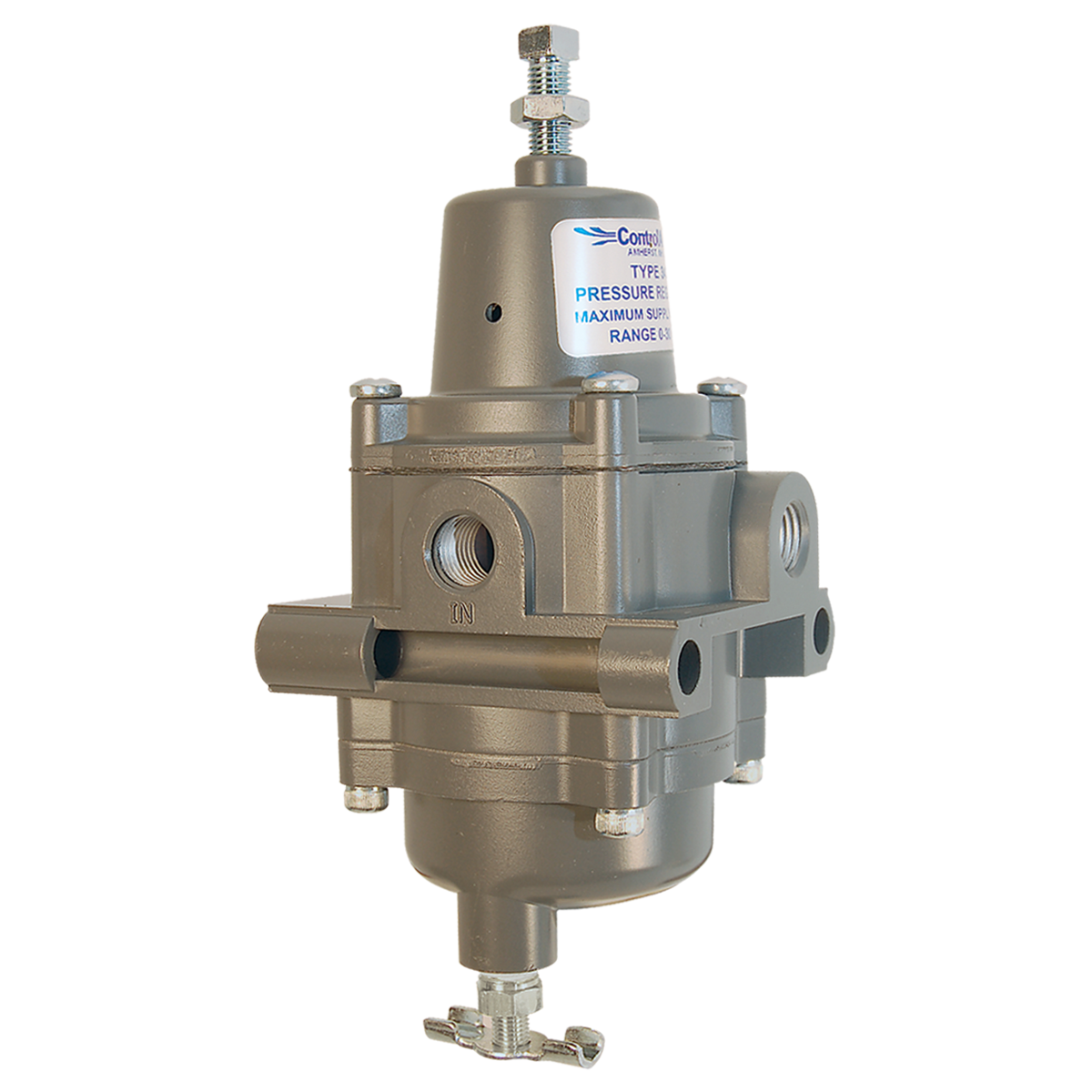
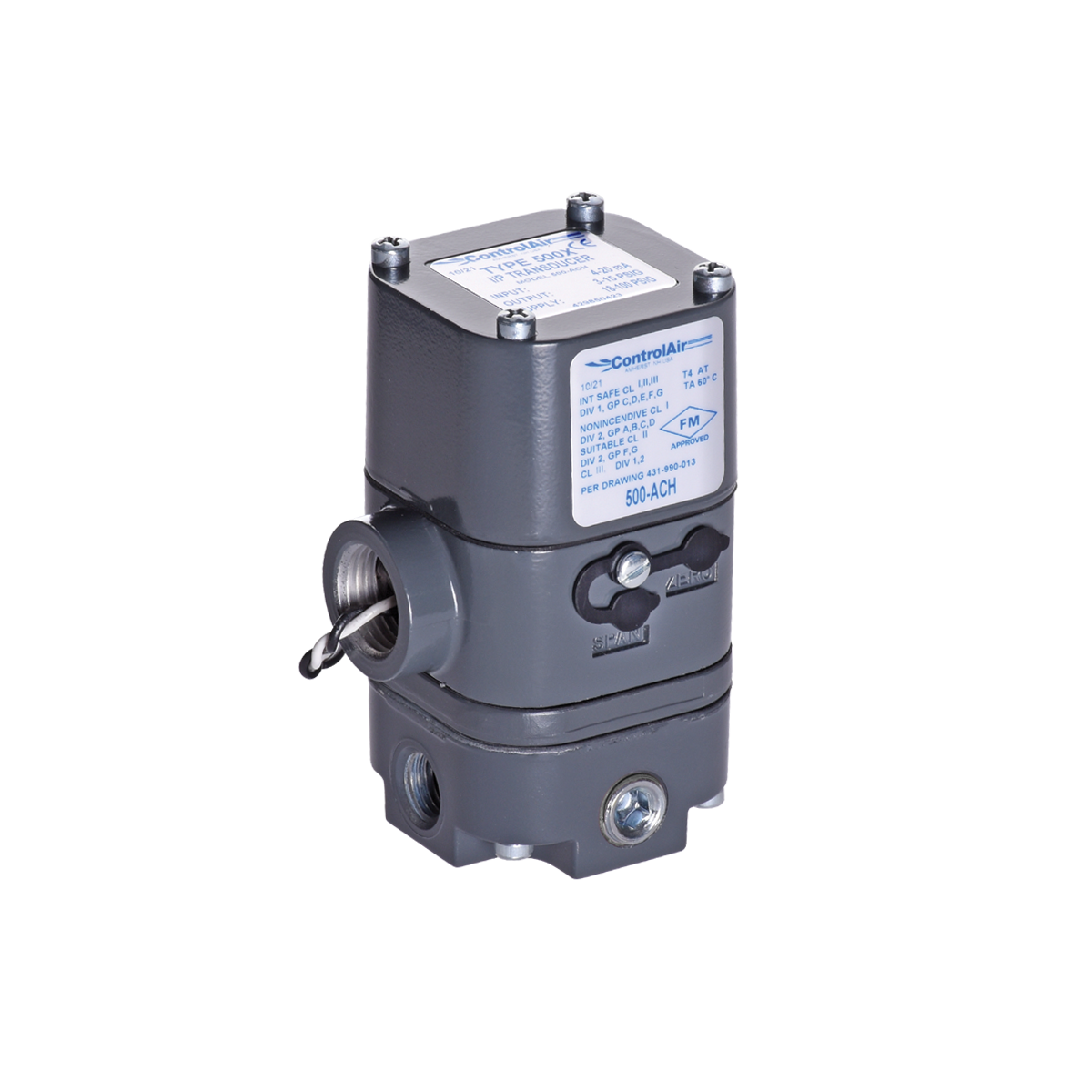
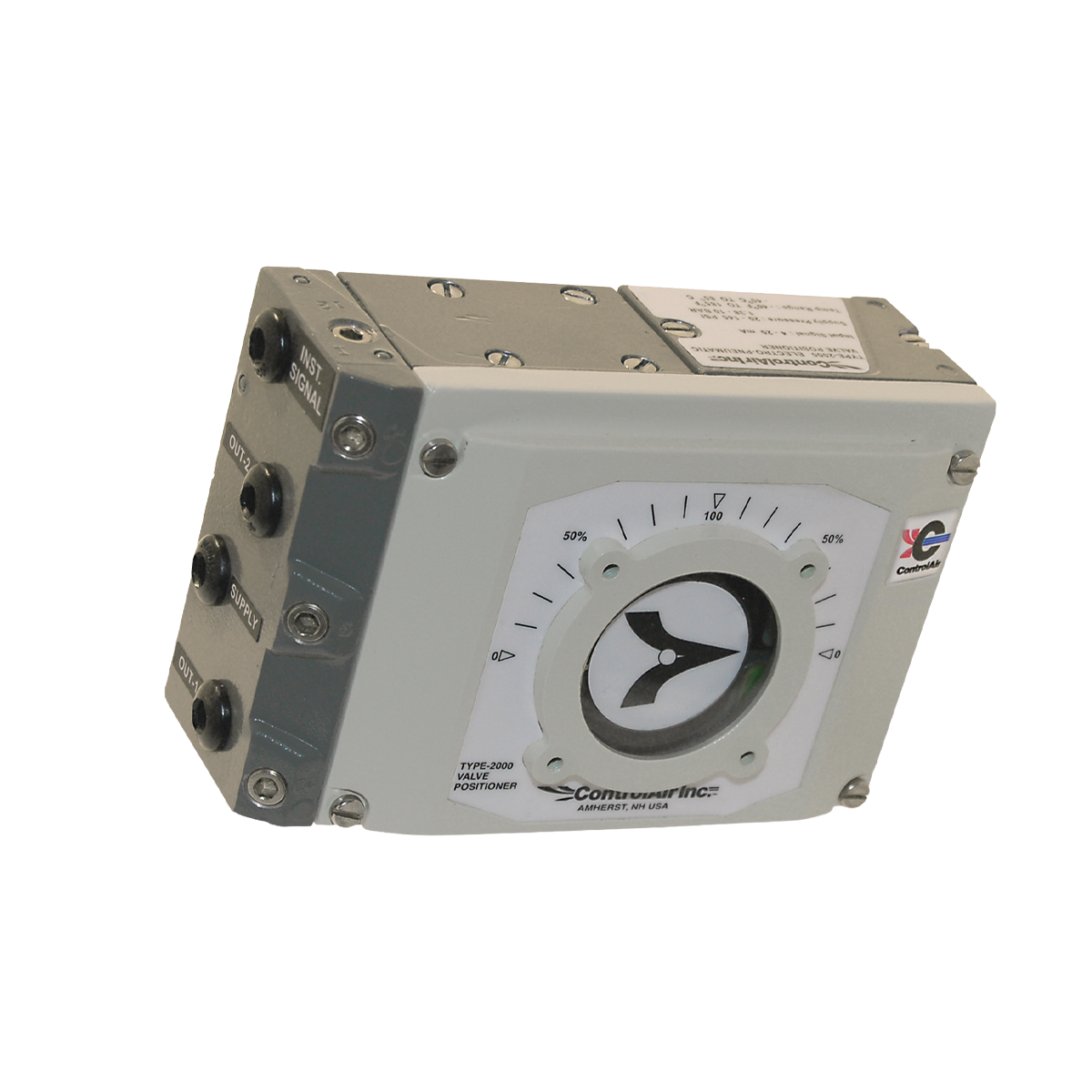
Pneumatic steam valve control uses compressed air to move an actuator that opens, closes, or modulates a steam valve. An air filter regulator prepares the instrument-air supply, while a valve positioner adjusts actuator pressure to achieve the commanded valve position. An I/P transducer converts an electrical command into a pneumatic signal when the selected control arrangement requires it.
These pneumatic components handle instrument air. The steam flows through the process valve, whose body, trim, and connections must be selected for the steam service.
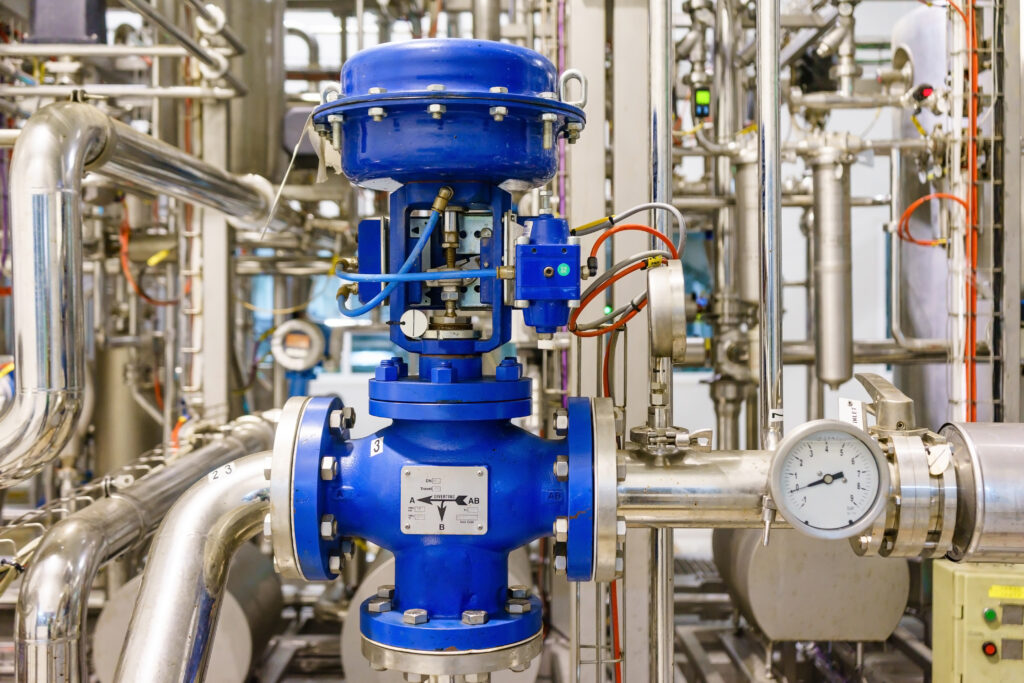
A steam control valve changes the amount of steam passing through a process line. In an automated system, a controller adjusts the valve command in response to a measured process variable, such as temperature, pressure, or flow.
For example, a temperature-control loop can change steam delivery to a heat exchanger as heating demand changes.
The appropriate valve and actuator depend on the required flow, steam pressure and temperature, pressure differential, shutoff requirements, and operating duty.
The process controller generates a command for the valve. The pneumatic control equipment then adjusts actuator pressure so the actuator moves the valve toward the required position.
With a positioner, actual valve travel is compared with the commanded position. The positioner supplies or exhausts actuator air to correct the difference.
The process controller and valve positioner perform different jobs: the controller responds to the process measurement, while the positioner controls valve travel. Correct valve position does not, by itself, establish a particular steam flow rate.
| Component | Main Function | Selection Consideration |
|---|---|---|
| Air Filter Regulator | Filters the instrument-air supply and reduces it to the required pressure. | Match filtration, supply pressure, and flow capacity to the connected equipment. |
| I/P Transducer | Converts a current command into a proportional pneumatic pressure signal. | Confirm whether a separate converter is needed and match the signal ranges. |
| Valve Positioner | Uses valve-position feedback to adjust actuator air pressure. | Match the input signal, actuator type, travel, mounting, and air-delivery requirements. |
An air filter regulator helps provide a cleaner, more consistent air supply to the positioner, transducer, or actuator circuit.
The filter captures particles according to its rating. The pressure regulator senses regulated downstream pressure and adjusts incoming airflow to help maintain its setting.
Contamination can obstruct small pneumatic passages, while an inadequate or unstable supply can affect actuator response. Select the filter regulator for the equipment’s specified air quality and peak airflow demand.
A standard particulate filter regulator does not replace an air dryer or every other stage of air treatment.
An I/P transducer is useful when the controller provides a current signal but the receiving pneumatic device requires a pressure signal.
A common configuration converts 4–20 mA into 3–15 psig. For example, the ControlAir Type 500 is available with that input and output combination.
The I/P establishes a pneumatic command; it does not independently measure valve travel. Where accurate positioning is required, the positioner provides that feedback function.
No. The arrangement depends on the positioner’s input.
Both arrangements also require an appropriate instrument-air supply. Confirm the selected product’s connections rather than assuming that all components belong in one serial chain.
A valve positioner compares the requested position with actual valve travel and adjusts actuator pressure until the position error is reduced.
ControlAir’s Type 2000 family includes pneumatic and electro-pneumatic configurations for rotary and linear valve actuators. Its force-balanced designs use pneumatic pilot control to load and vent the actuator.
The Type 2000 CA2005/CA2010/CA2011 group, for example, accepts a 4–20 mA command. Select the particular model and approvals for the installation.
For help selecting instrument-air components for pneumatic steam valve control, contact ControlAir at [email protected] with your valve, actuator, signal, supply-pressure, and response requirements.