Sign up for the ControlAir newsletter.
Get news, updates, and offers direct to your inbox.
Solenoid-based electronic pressure regulators use an electrical command signal, two solenoid valves, and pressure-sensor feedback to control pneumatic output pressure. One valve admits supply air, while the other exhausts air. Electronic controls compare the measured pressure with the requested setpoint and adjust the valves as needed.
This closed-loop design allows automated equipment to change pressure electronically while monitoring actual output. It is useful when a process requires repeatable pressure adjustments, remote control, or integration with a PLC.
In a dual-solenoid regulator such as ControlAir’s Type 1000P Series, pressure control follows four basic steps:
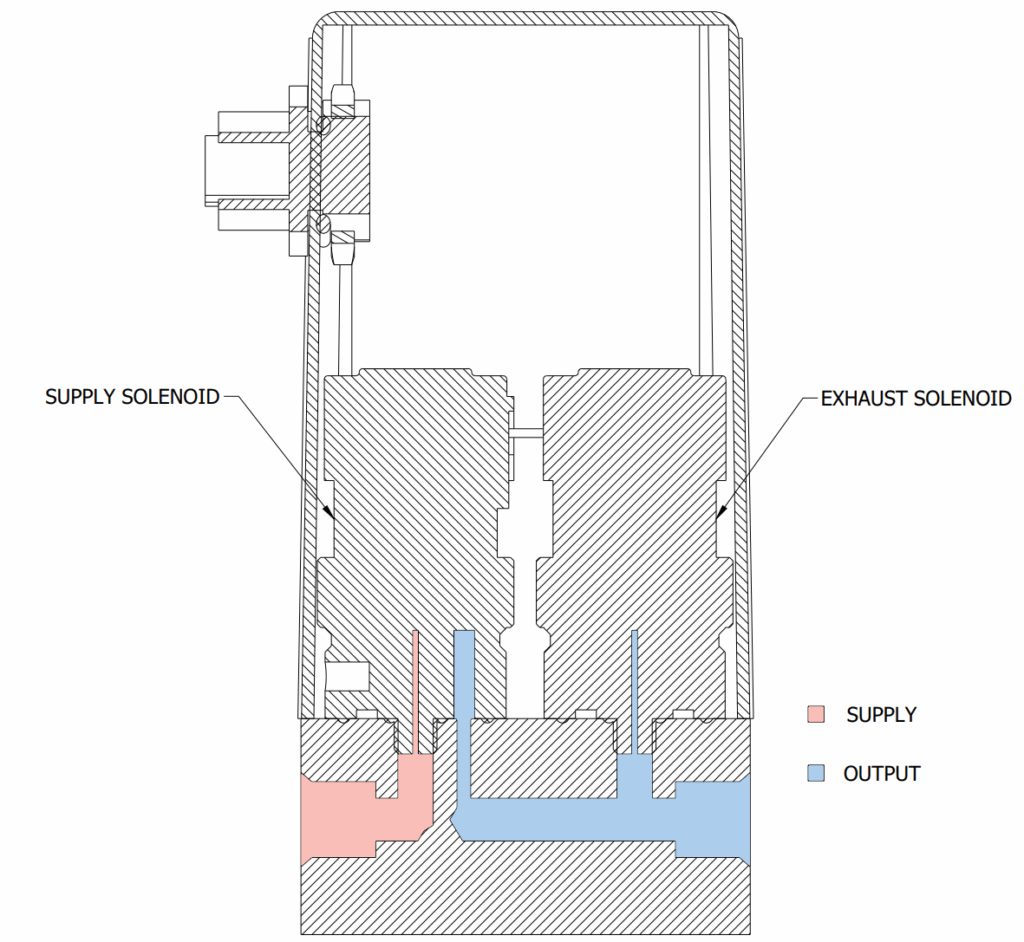
Closed-loop control uses measured output pressure to guide corrections. The regulator therefore responds to actual pressure rather than relying only on a commanded valve position.
For automated equipment, this offers several practical benefits:
Signal compatibility depends on the model and ordered configuration.
The ControlAir Type 1000P and Type 1005P offer 0–5 VDC, 1–5 VDC, 0–10 VDC, 4–20 mA, or RS485 Modbus input options. The Type 1010P offers 0–10 VDC or 4–20 mA inputs.
The command input requests a pressure; the monitor output reports measured pressure. Select both to match the PLC, controller, or data-acquisition system. These models also require a separate 24 VDC power supply.
The Type 1000P, Type 1005P, and Type 1010P use closed-loop electronic control but serve different precision, flow, and integration requirements.
| Model | Main Selection Priority | Standard Output Ranges | Published Accuracy |
|---|---|---|---|
| Type 1000P | Precision control for lower-flow applications. | 0–30, 0–60, or 0–120 psig | ±0.1% full scale |
| Type 1005P | Higher flow with broad analog and digital signal options. | 0–60 or 0–120 psig | ±0.1% full scale |
| Type 1010P | Economical electronic control with streamlined signal choices. | 0–120 psig | ±0.5% full scale |
For flow comparison, the Type 1000P lists 34 SCFH at 8 bar, while the Type 1005P and Type 1010P list 2,543 SCFH at 8 bar. Review the complete specifications and operating conditions when sizing a regulator.
Full-scale accuracy is different from percentage-of-reading accuracy. For example, ±0.1% of a 120 psi full-scale range equals ±0.12 psi.
The published response time for these models is 0.8 seconds. Installed system response also depends on downstream volume, tubing, available airflow, and the size of the requested pressure change.
A regulator controlling a small chamber may respond differently from the same regulator connected to a large pneumatic load. Evaluate both filling and exhausting performance under the intended operating conditions.
Common applications include automated assembly, pneumatic actuation, robotics, leak testing, calibration equipment, laboratory instrumentation, and OEM machinery.
For example, an automated test station can command different pressure levels during a test sequence and use the monitor output to record actual pressure. Applications with larger downstream volumes may require a higher-flow model.
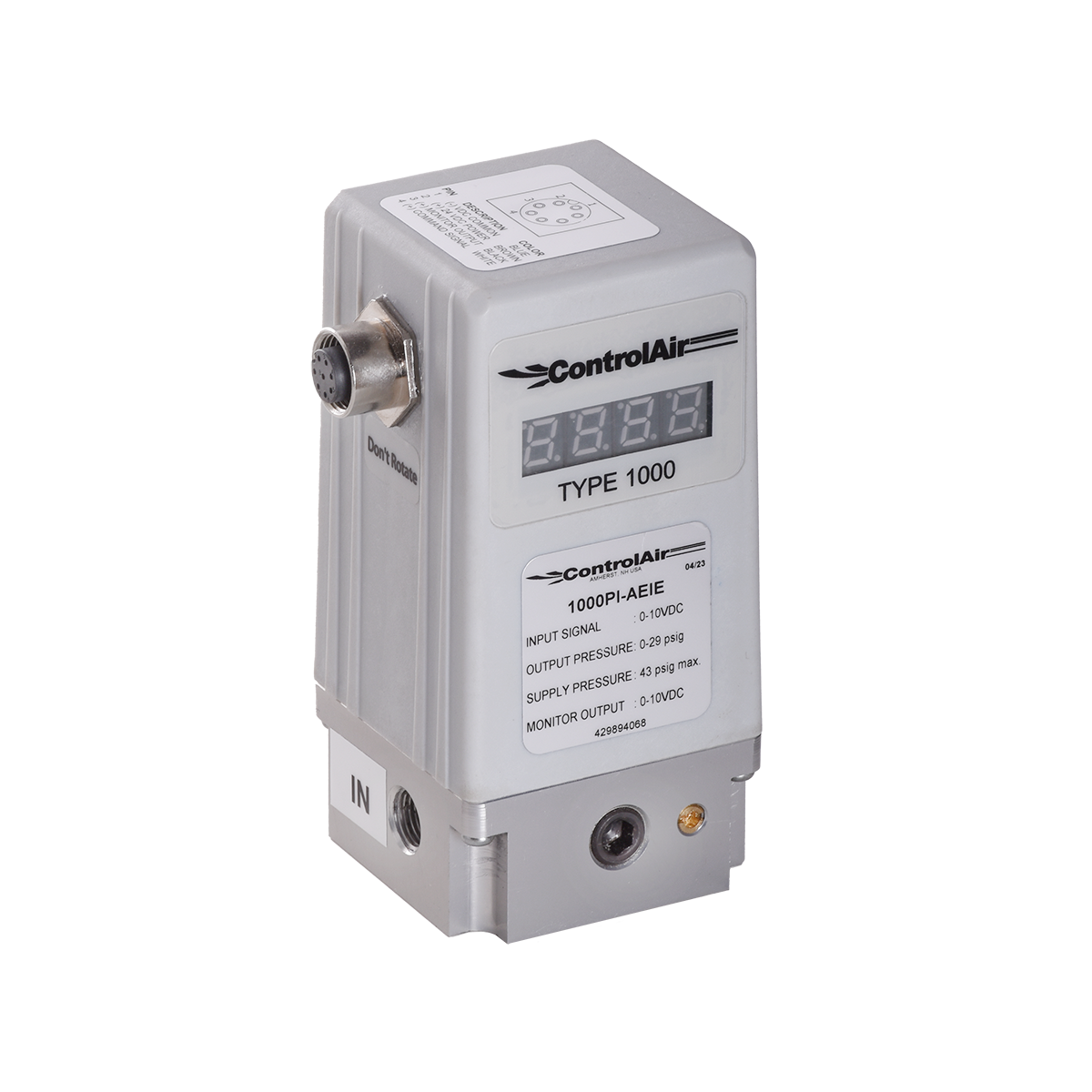
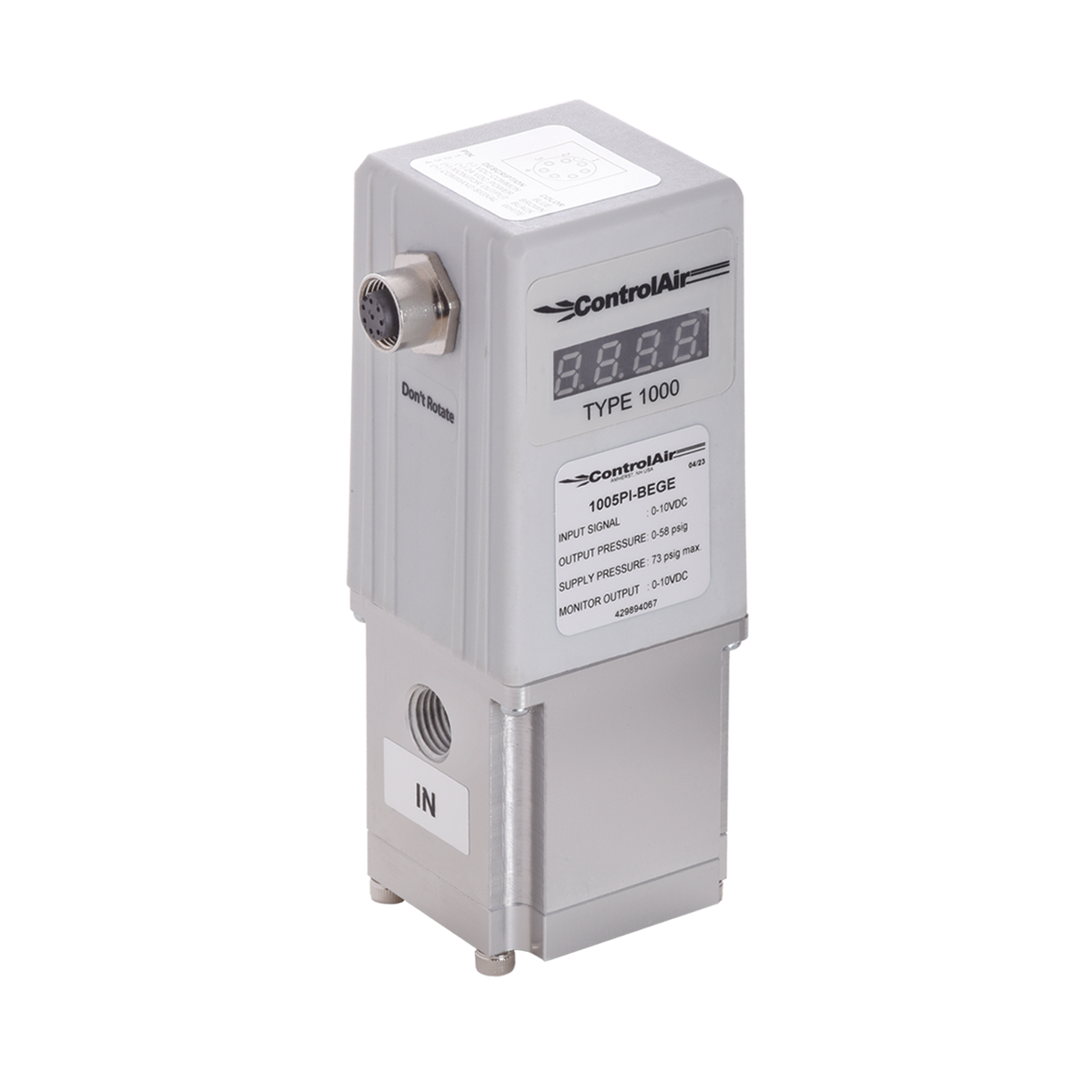
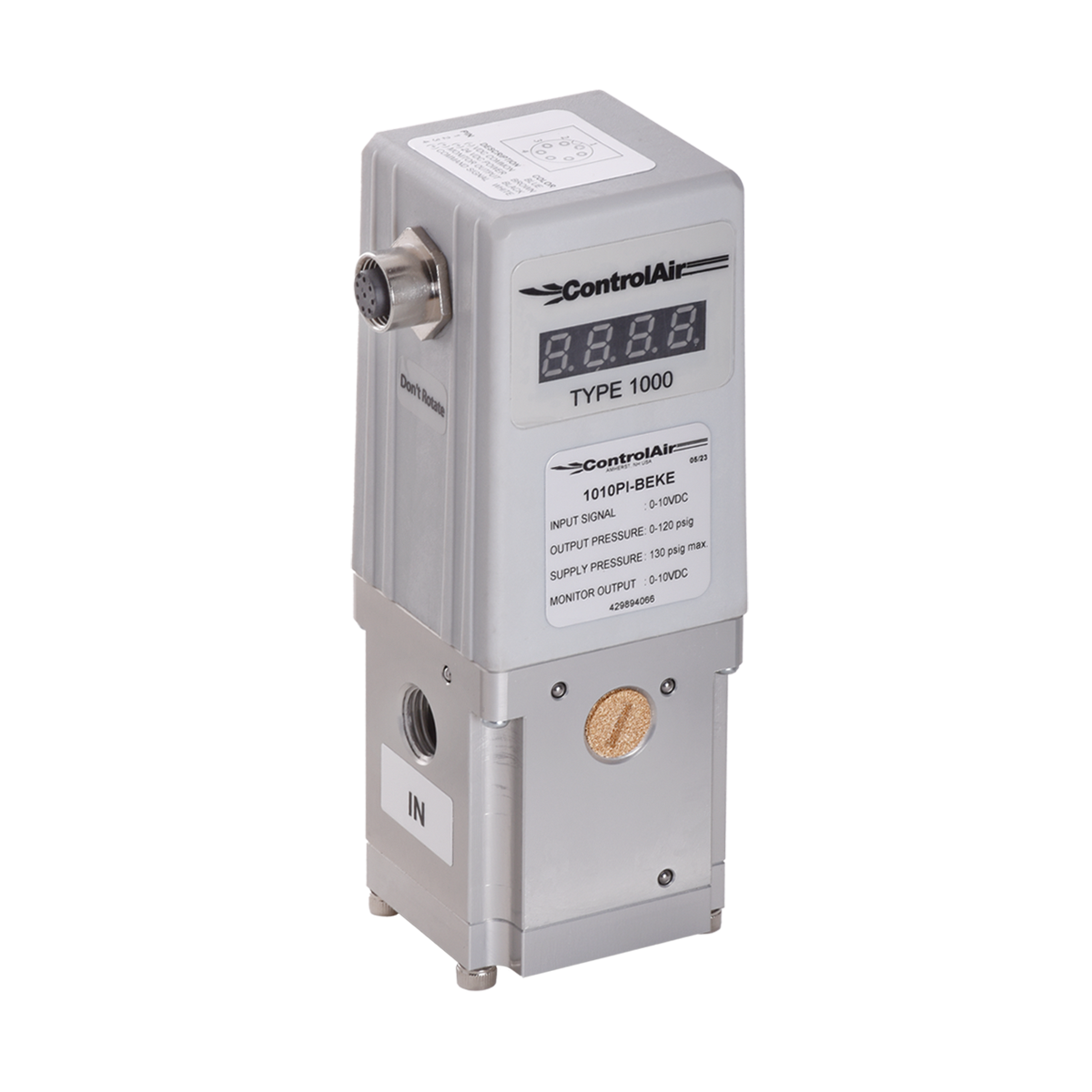
Explore the Type 1000P Precision Regulator, Type 1005P High Flow Regulator, and Type 1010P Economic Regulator for detailed specifications and configuration options.
Need help selecting an electronic pressure regulator? Contact ControlAir at [email protected] with your pressure range, flow demand, and control-signal requirements.