Sign up for the ControlAir newsletter.
Get news, updates, and offers direct to your inbox.
ControlAir diaphragm air cylinders provide virtually frictionless conversion of pneumatic pressure into precise linear force for highly sensitive motion control applications. Utilizing rolling diaphragm technology instead of conventional sliding seals, these pneumatic cylinders eliminate stiction, minimize hysteresis, and prevent blow-by leakage for exceptional accuracy, repeatability, and responsiveness.
Designed for web tension control, dancer roll systems, valve actuation, accumulators, positioning systems, and precision force applications, ControlAir diaphragm air cylinders deliver smooth low-friction operation across a wide range of industrial automation and process control environments. Available in rolling diaphragm, small bore compact, and ultra cylinder configurations, these cylinders support applications requiring precise response to small pressure variations and highly repeatable linear motion.
Showing all 3 results
Selecting the correct diaphragm air cylinder requires evaluating force requirements, stroke length, mounting configuration, friction sensitivity, operating pressure, and environmental conditions. Applications requiring highly responsive motion control benefit from rolling diaphragm technology that eliminates the friction and seal wear commonly associated with conventional piston cylinders.
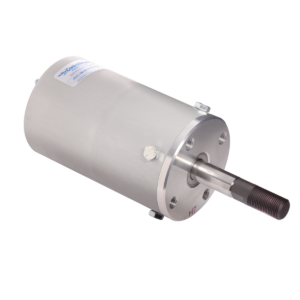
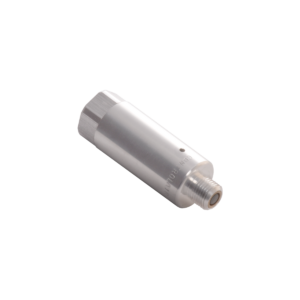
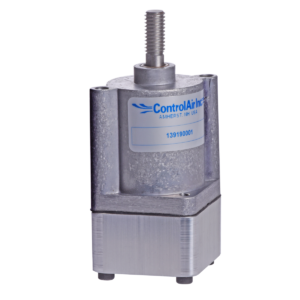
Rolling diaphragm cylinders are ideal for long-stroke precision applications requiring smooth motion and accurate force control. Small bore compact cylinders support space-constrained installations where shorter stroke and high force output are required, while ultra cylinders with linear ball bearings provide near-zero friction operation for the most demanding precision applications.
Important selection considerations include:
Custom diaphragm materials are available for applications operating in temperatures from -75°F to 400°F, while optional bearing and rod configurations support specialized industrial and OEM requirements.
For additional guidance, review ControlAir’s
Product Selection Guides
How to Determine the Appropriate Regulator
Diaphragm air cylinders are used in systems requiring highly sensitive, low-friction pneumatic actuation and precise linear force control.
Common applications include:
ControlAir diaphragm air cylinders are especially effective in applications where conventional piston cylinders introduce excessive friction, hysteresis, or inconsistent response.
For more application-specific solutions, explore ControlAir’s: Industries We Serve.
When evaluating diaphragm air cylinders, several performance factors directly affect motion accuracy, response sensitivity, and long-term reliability.
Rolling diaphragm seals eliminate sliding friction between the piston and cylinder wall, providing exceptionally smooth and sensitive motion control. This design virtually eliminates stiction and blow-by leakage.
The absence of friction and leakage allows diaphragm cylinders to provide precise and repeatable linear force response unmatched by conventional sliding-seal pneumatic cylinders.
Rolling diaphragm cylinders respond accurately to small pressure variations, making them ideal for tension control, positioning, and force-sensitive applications.
Standard diaphragm cylinders support operating pressures up to 145 psig (10 bar) while maintaining stable linear force output.
Standard cylinders operate from approximately -40°F to 225°F, while custom diaphragm materials allow operation from -75°F to 400°F for specialized applications.
Available bearing configurations include bronze bearings, linear ball bearings, or floating rod designs depending on application precision and load requirements. Ultra cylinders combine rolling diaphragm seals with Grade “A” linear ball bearings for near-zero friction operation.
Small bore compact cylinders provide high force in limited installation space while maintaining friction-free rolling diaphragm performance.
ControlAir diaphragm cylinders can be modified with custom rod configurations, diaphragm materials, spring designs, and bearing systems to support specialized OEM and industrial applications.
These factors directly affect motion sensitivity, control precision, and long-term pneumatic system performance.
ControlAir diaphragm air cylinders are available in multiple sizes and configurations to support a wide range of industrial applications.
Typical specifications include:
Exact specifications vary by cylinder series and configuration.
ControlAir provides technical resources to support product selection, integration, and pneumatic motion control optimization:
Product Selection Guides
CAD Models & Product Specifier
Certifications
White Papers
FAQs
These resources provide detailed specifications, installation guidance, and application insights.
Choosing the right diaphragm air cylinder depends on your force requirements, stroke length, friction sensitivity, environmental conditions, and mounting constraints.
Provide your operating pressure, required force output, stroke requirements, and application details, and our team can help identify the best cylinder configuration for your system.
Request a Quote
Ask an Expert
Find a Distributor
A diaphragm air cylinder uses a rolling diaphragm seal to convert pneumatic pressure into linear force with virtually no friction, stiction, or blow-by leakage.
Rolling diaphragm cylinders provide extremely low friction, high sensitivity, low hysteresis, excellent repeatability, and smooth linear motion compared to conventional sliding-seal pneumatic cylinders.
Common applications include web tension control, dancer roll systems, valve actuation, accumulators, positioning systems, and precision force control applications.
Rolling diaphragm cylinders eliminate sliding seal friction and blow-by leakage, providing smoother motion and more precise force control than conventional piston-style cylinders.
Yes. Standard models operate across wide industrial temperature ranges, and custom diaphragm materials allow operation from -75°F to 400°F in specialized applications.